
Concrete Patios
Your backyard deserves a space where you can relax, entertain, and enjoy the outdoors without worrying about maintenance.
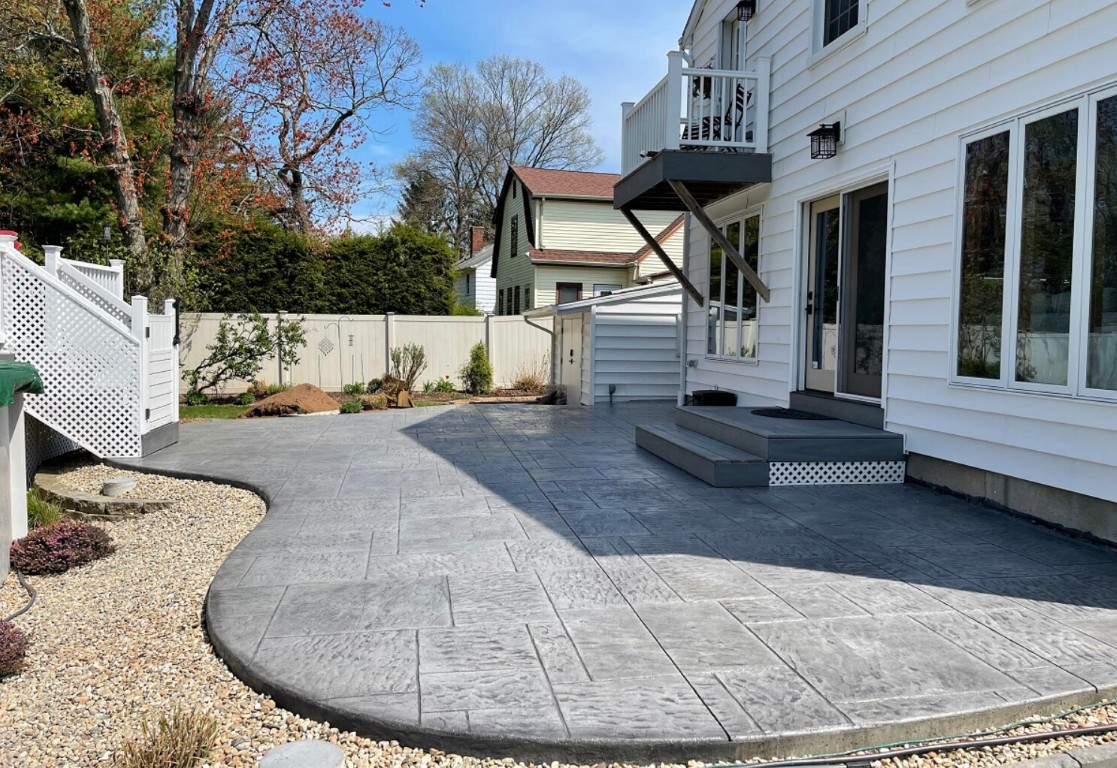
Why Choose Concrete for Your Patio
A concrete patio gives you a solid foundation for outdoor living at a price that makes sense. Unlike wood decks that rot and splinter over time, concrete stands up to weather and heavy use without falling apart. You never have to worry about termites eating away at your investment or spending weekends sanding and staining. Concrete just needs occasional cleaning with soap and water to look great year after year.
The Texas heat can be brutal on outdoor surfaces. Wood decks get hot enough to burn your feet, and pavers can shift and settle creating tripping hazards. Concrete stays more stable and you can add light colors or special coatings to reduce heat absorption. We also install your patio with proper drainage so water flows away from your house instead of pooling up. This protects your foundation and keeps your outdoor space usable even after rain.
Concrete patios offer design flexibility that surprises most homeowners. You can choose from smooth finishes, textured surfaces, stamped patterns, or colored concrete. Want the look of flagstone or slate without the high cost? Stamped and decorative concrete creates realistic stone patterns at a fraction of the price. You can also add borders, bands, or multiple colors to create a custom look that matches your home style.
Planning Your Perfect Outdoor Space
The right patio size depends on how you plan to use the space. A small area for a table and chairs needs at least 12 by 12 feet. If you want room for a full dining set plus a grill, consider 16 by 20 feet or larger. We help you think through furniture placement, traffic flow, and future needs so your patio works the way you want it to.
Location and Sun Exposure
Where you put your patio matters as much as its size. Most people want easy access from their back door or kitchen. You also need to think about sun and shade throughout the day. A patio in full sun all afternoon might be too hot to enjoy in July and August. Consider adding a pergola or planning for shade structures later. The location should also work with your yard drainage and stay away from underground utilities.
Design Features That Add Value
Basic rectangular patios work fine, but you can add interest with curves, multi-level designs, or integrated features. Fire pit areas create a focal point and extend your outdoor season. Built-in seating walls provide extra places to sit without taking up floor space. You might also want to include planter boxes, lighting hookups, or water features. We can design your patio to connect with existing walkways and flatwork for a cohesive look. The key is planning these elements before we pour so everything integrates properly.
Popular Patio Sizes and Uses
- •10x10 feet works for a small bistro set or a few chairs in a cozy corner
- •12x12 feet fits a standard round table with four chairs plus some walking space
- •16x16 feet accommodates a dining area plus a separate seating zone with a loveseat
- •20x20 feet or larger provides room for multiple furniture groups, a grill area, and traffic flow
How We Build Patios That Last
Professional patio installation starts with proper site preparation. We mark out the exact dimensions and shape using stakes and string lines. Then we excavate the area to remove grass, roots, and topsoil. The excavation depth depends on your soil type and the final patio thickness. Most residential patios use 4 inches of concrete over a compacted gravel base.
Base Preparation
A solid base prevents settling and cracking over time. We bring in crushed stone or gravel and spread it evenly across the excavated area. This material gets compacted using a plate compactor or roller until it is firm and level. The base layer typically runs 4 to 6 inches thick depending on soil conditions. Good drainage under your patio is important so we make sure the base material allows water to flow through instead of pooling underneath.
Forms and Reinforcement
We install forms around the perimeter to contain the concrete and create clean edges. The forms also establish the correct slope for drainage. Your patio should slope slightly away from your house so water runs off instead of toward your foundation. We place wire mesh or rebar in the center of the slab thickness to prevent cracking and hold everything together. This reinforcement is especially important for larger patios or areas with challenging soil.
Pouring and Finishing
On installation day, we coordinate concrete delivery and have our full crew ready to work. Fresh concrete gets placed quickly and spread evenly across the form. We use screeds and floats to level the surface and work out air bubbles. The finishing process depends on the look you want. A smooth troweled finish works for covered patios. A broom finish adds texture and traction for outdoor areas. If you choose stamped concrete, we press patterns into the surface while it is still workable. We cut control joints to manage cracking and apply curing compound to protect the surface as it hardens.
Common Questions About Concrete Patios
Ready to Transform Your Backyard?
Let us help you design and install a concrete patio that fits your lifestyle and budget. Call today for a free consultation and quote.
(726) 465-9261